
Route 1
Dafnes - Siva - Venerato

The wine land in Dafnes, Siva, Venerato and Avgeniki is excellent. Louloudis, Douloufakis, DAF Wines and Amargiotakis wineries are situated in Dafnes.
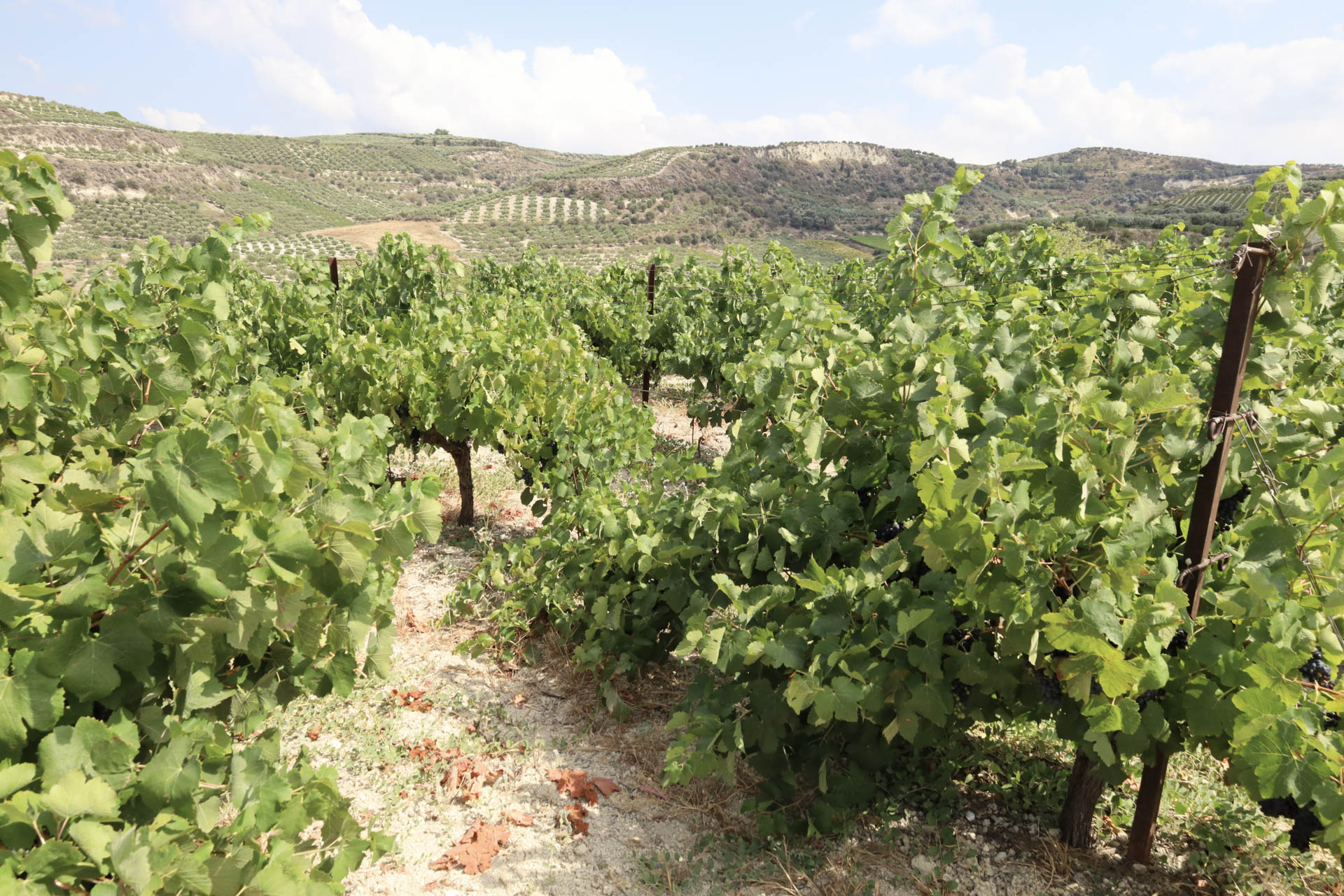
To the north, one sees the blue Cretan Sea, Dia islet and Heraklion, to the east, the holy mountain Giouchtas, to the west Agios Myron and to the south, Siva, Venerato, Avgeniki and Agios Thomas. Among them there are endless vineyards in which green or gold colors alternate with the gray color of the olives depending on the season. Daskalakis, Idaia Gi, Efrosini and Metaxari wineries are located here.
Siva, Venerato, Avgeniki, facing the rock of Ai Nikolas, and Paliani Monastery are surrounded by earthen mounds and valleys while, eastwards, Kokkina Patitiria constitute a great vinous route.
Points of Interest
1. Dafnes
Dafnes
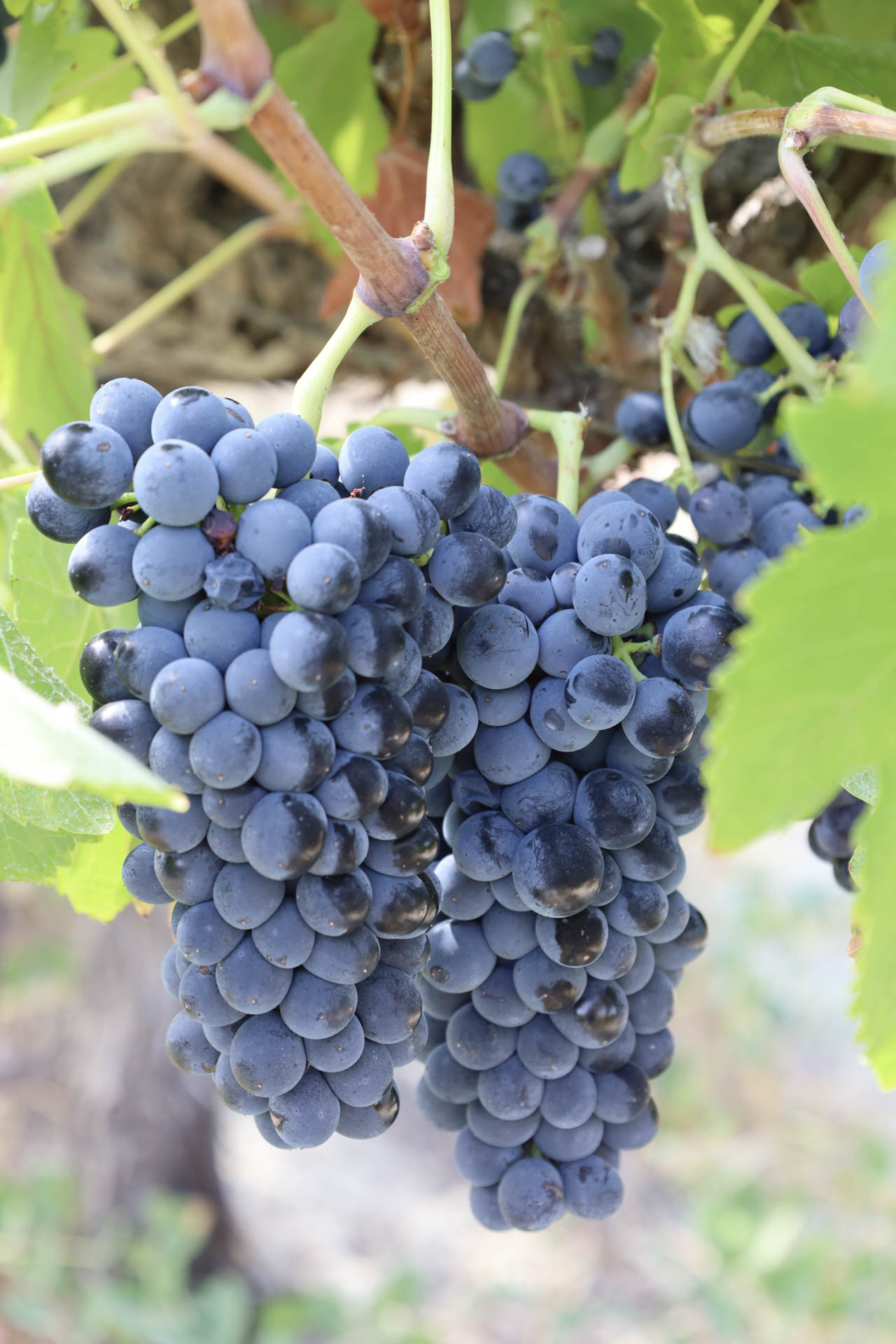
An excellent wine land stretches around Dafnes, Siva, Venerato and Avgeniki. Dafnes is built in a prominent position on the saddle of a hill range in a SW-NE direction. The region belongs to a Protected Designation of Origin zone – PDO Dafnes, which is related to Liatiko grape variety. It is surrounded by vineyards and inside and around them exist the Louloudis, Douloufakis, DAF Wines and Amargiotakis wineries.
To the north there is the blue Cretan sea (Homer’s “wine-dark” sea), Dia islet and at a distance of about ten kilometers (on the map), Heraklion. To the east there is the holy mountain Giouchtas at a distance of about nine kilometers, to the west, facing a twin summit hill, Agios Myron and ancient Rafkos at a distance of only three kilometers. To the south there is Siva, Venerato, Avgeniki and Agios Thomas. And everywhere you look there are endless vineyards.
Since many decades, Dafnes organize a wine feast in which wine and music coexist in the village square during the beautiful summer evenings.

2. Louloudis Winery
Louloudis Winery
Louloudis Winery began its operation in Dafnes, Heraklion in 1920, with a family tradition spanning three generations. At that time, grandfather Antonis Louloudis cultivated liatiko, takta and kotsifali in his vineyards. With scant means, bags made of animal skins were filled with wine from wooden barrels and they were transported to Heraklion by cart.
In 1974 his sons take over the winery and they upgrade it. They store the wine in concrete tanks and wooden barrels and they transport it in plastic barrels.
In 1999, grandson Antonis takes over the management and in 2004 he plants new local Greek and international wine grape varieties such as: moschato spinas, thrapsathiri, vidiano, plyto, syrah, merlot, sauvignon blanc etc.
In 2012, the state-of-the-art winery-bottling plant began its operation, and the wine is stored in stainless steel tanks and aged in oak barrels.
The initial bottling of the new Louloudis Winery occurs in 2016 with “Bad Bird” («Κακό Πουλί») white and red wine, whereas in 2017 and 2018, 5 new labels are added.
A new era begins just before the winery’s 100th anniversary.


3. Douloufakis Winery
Douloufaki Winery
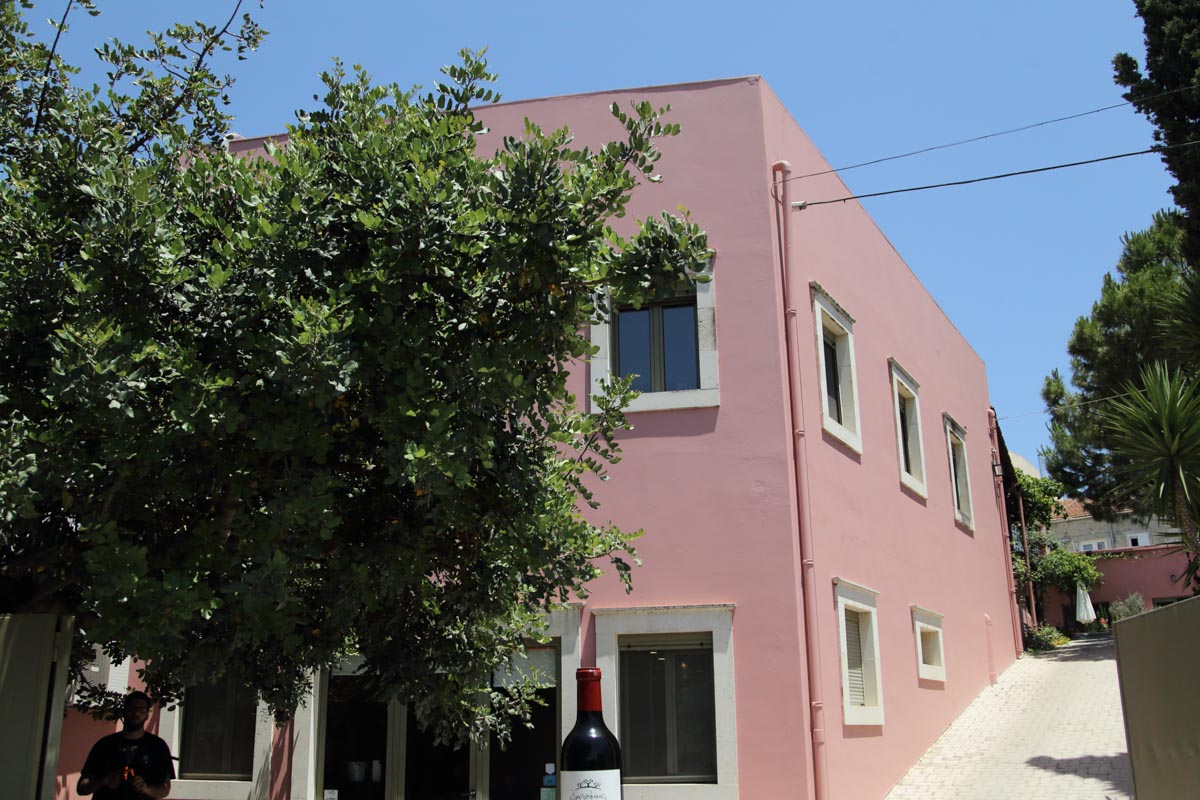
Douloufaki Winery is located in Dafnes village, a few kilometers south of Heraklion.
Its history starts in the 1930s, when grandfather Dimitris Douloufakis professionally begins the production of wine by winepresses in the traditional way. During the 1960s, the family winery was managed by his son Giorgos Douloufakis. In 1993, Nikos Douloufakis, third generation, who studied Oenology at the Oenology School of Alba in Piemonte, Italy, took over the business and gradually modernized the facilities, restructured the vineyard and started to bottle the wine. In 2001, the certified organic cultivation of their privately owned vineyards begins and, after 5 years, five labels of the winery receive the certification of an organic farming product.
The production of Douloufaki Winery is based on Cretan native varieties (Vilana, Vidiano, Moschato Spinas, Assyrtiko, Malvasia, Mantilari, Liatiko and Kotsifali) as well as on international ones (Chardonnay, Sauvignon Blanc, Cabernet Sauvignon, Sangiovese and Syrah).
Douloufaki winery has won many distinctions in pan-European and global wine competitions.
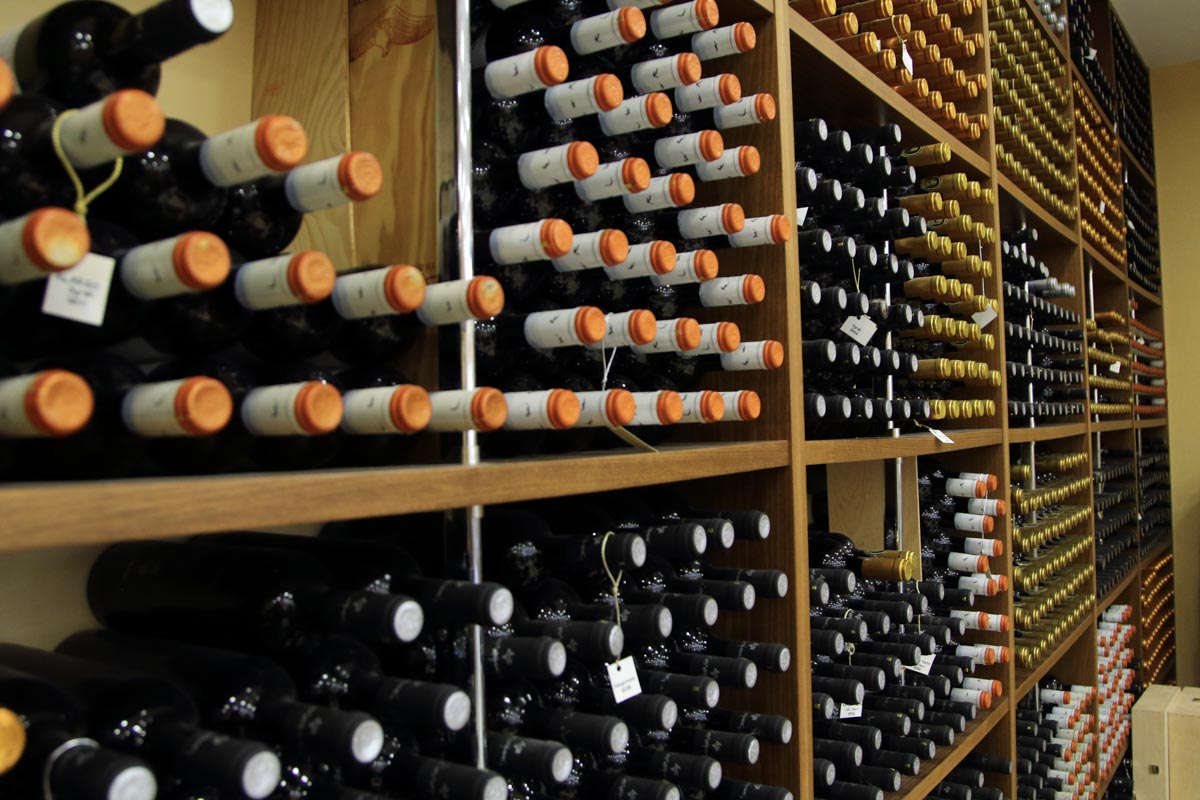
The Winery is open to visitors and it offers guided tours of its facilities and of the winemaking process, as well as wine tasting packages.


4. DAF wines
Daf wines
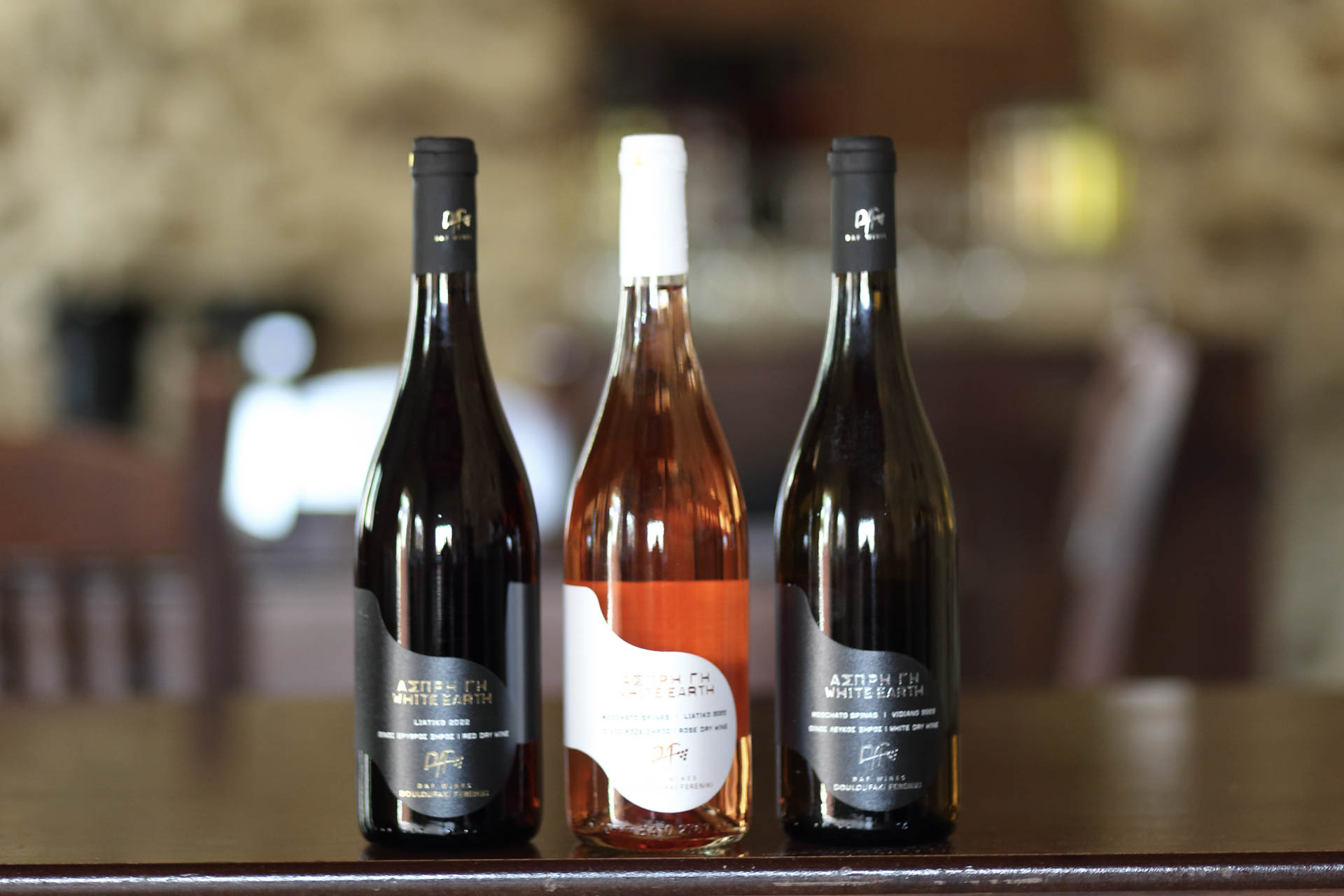
Daf wines family winery is located in the submontane area of Dafnes, from which it took its name. For more than 100 years, the family has been devoted to the cultivation of vines and wine production, based on the experience and knowledge inherited from their grandparents.
The first distinction came in 1952, when grandfather Evangelos Douloufakis received an award for the excellent quality of his wine at Thessaloniki International Exhibition. Since then and until today, Daf winery wines have received awards in important International Competitions.
Thus wine production tradition continues, imparting to the younger generations time-honored principles and values, and promoting Cretan wine varieties with unique characteristics.
The Winery can be visited and it offers unique wine tour and tasting experiences.




5. Amargiotakis Winery
Amargiotaki Winery
Amargiotaki Winery is located in Dafnes, Heraklion, Crete in the vine-growing zone of Dafnes where several of the native varieties of Crete are cultivated in privately owned and cooperating vineyards, with emphasis on the Liatiko (PDO) variety.
The history of the Winery begins in 1965, when grandfather Amargiotakis began the production of quality wines, whereas later his son, with his special love for viticulture, expanded their privately owned vineyards by planting new vines.
A third-generation winemaker, Manolis Amargiotakis, the current owner of the Winery, took over the business in 2003. In 2006, he moved to Athens to promote the Winery’s products but also to expand his knowledge of winemaking, which he continued to do later, visiting major European winemaking regions.
In 2017 he completes the full relocation and modernization of the winery, always assisted by his wife Eleftheria.


6. Siva
Siva
There are many versions regarding the origin of the name of Siva settlement, which is located approximately 60 kilometers south of Heraklion. For many people, the location name Siva (-si-wa) refers to God Shiva (Dionysus). If there was a common background in the so-called Indo-European languages, we might guess that god Shiva-Dionysus was worshipped in the wider region, and the location name Siva is a remnant of that era, which may hide an ancient language substructure.
The settlement stands next to a prominent hill surrounded by vines and olive trees; Daskalaki winery is located there. The wider region belongs to one of the Protected Designation of Origin zones – PDO Dafnes zone, which involves the Liatiko grape variety.
This beautiful traditional village has been declared preservable by the Ministry of Culture. Since very early (1257), during the period of the Venetian occupation of Crete, as seen in the surviving records, the village and its fertile surroundings were exploited (rented) by the conquerors. Indeed, the soil is fertile, it has a high clay content, which means that it holds the little moisture required by the vine during the months of July-August, and the temperature is suitable for the production of high-quality grapes due to the NW meltemi winds. In other words, the micro-climatic-soil data favor the cultivation of vines and, consequently, the production of excellent quality wine.


7. Daskalakis Winery
Silva Daskalaki Winery
Silva Daskalaki Winery is located in the Prefecture of Heraklion, specifically in Siva village. The name Silva comes from Siva (si-wa) the location’s name, which refers to god Shiva (corresponding to ancient Greek god Dionysus) and it is saved as a name in Hinduism, the oldest “living” religion on the planet.
The larger area belongs to one of the Protected Designation of Origin zones – PDO Dafnes, which involves the Liatiko variety. The surrounding area has always been an ideal viticulture zone since its microclimate allowed the production of high quality wines.
The vineyards of Silva Winery are located around the region of the Winery, in Siva, and some in more remote areas, close to the sea. This diversity of the vineyards’ microclimate offers an additional complexity to the final product.


8. Venerato
Venerato
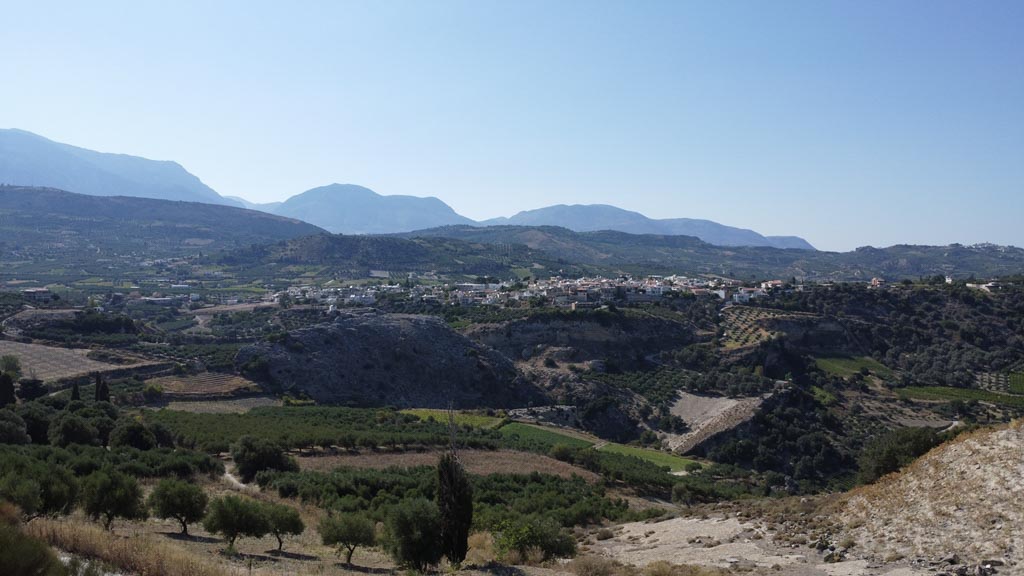
Around the settlements of Venerato and Avgeniki extends a fine wine land.
Opposite, on the slope located south and west of the rocky mound, where the church of Agios Nikolaos stands, evidence of habitation since the Minoan era was discovered. On the rock, hewn remains (stairs, tanks, etc.) have been preserved, referring to a fortified citadel of historical times. In the surrounding area there is thick soil, suitable climate and the right altitude, as well as enough water sources; those elements constitute strong causes for self-sufficiency and permanent human settlement.
Idaia Gi, Efrosini and Metaxari wineries are located in Venerato and Avgeniki.
This route includes vineyards whose colors change depending on the season. The wineries, the cauldrons for the preparation of raki (rakokazana), the monastery, as well as location names like Apollon, Siva, etc. are remnants of human presence in this fertile area.
Many grape treading tanks (patitiria) still exist today in the houses of the village, witnesses of a remarkable local wine production during past centuries.


9. IDAIA Winery
Idaia Winery
Idaia Winery is a family winery founded in the year 2000 by oenologists Vasilis Laderos and Kalliopi Volitaki. It is located in Venerato village, 17 kilometers south of Heraklion, and it belongs to Dafnes Protected Designation of Origin (P.D.O.) zone, one of the largest wine-producing zones of Crete; its main goal is the promotion of the varieties of the Cretan vineyard.
The company’s logo is an eight-petal daisy, originating from Phaistos disk where it is said that it symbolized the Sirius star, the brightest star in the night sky. This emblem is often met in ancient Greek discoveries. The name “Idaia” comes from Crete’s ancient name. According to the legend, Idaia was the wife of Zeus, the king of Crete, and the mother of the ten Kouretes. To honor her, King Zeus gave her name to Crete.


10. Efrosini Winery
Efrosini Winery
Efrosini Winery is located in Kerasia village of the Municipality of Heraklion, in a region full of trees, vines and olives. The wider region belongs to the Protected Designation of Origin – PDO Dafnes zone, which is related to Liatiko grape variety. The winery’s name “Efrosini” is derived from the ancient Greek word “efreno” (“ευφραίνω”), which means I make happy or I please someone. In the past it was said that “wine makes the heart of mortal man rejoice”.
The history of the family winery begins in 1999 when Antonis Kosmadakis and Maria Tylaki decided to replant their ancestors’ vineyards. Assisted by specialized and experienced scientists (agriculturists-chemists-biologists-viticulturists and others), they began the cultivation, by organic means and methods, not only of fine local grape varieties, but also of internationally known ones. So for red wines they produce Liatiko, Kotsifali, Cabernet sauvignon, Syrah, and Merlot, whereas for white wines they produce Vilana, Malvazia and Chardonnay. All the wines, as well as the winery have been certified by BIO Hellas.


11. Metaxari Winery
Metaxari Winery
Wine production is a family tradition passed down from generation to generation in Metaxari Winery, which is located at an altitude of 310 m, on the 17th km of Heraklion – Mires road.
In an idyllic landscape with verdant vineyards, this small family business has been transformed into the most modern winery, with perfect facilities and equipment of the latest technology. 2017 is the landmark year during which the production and bottling of the winery’s inspired quality wines began on a large scale, supplying Crete and the rest of Greece with wines of the Cretan land.
Their aim is to promote Crete’s unique varieties and, already during their first participation in an international competition, they were awarded the bronze medal for one of their wines.


12. Paliani Monastery
Paliani Monastery
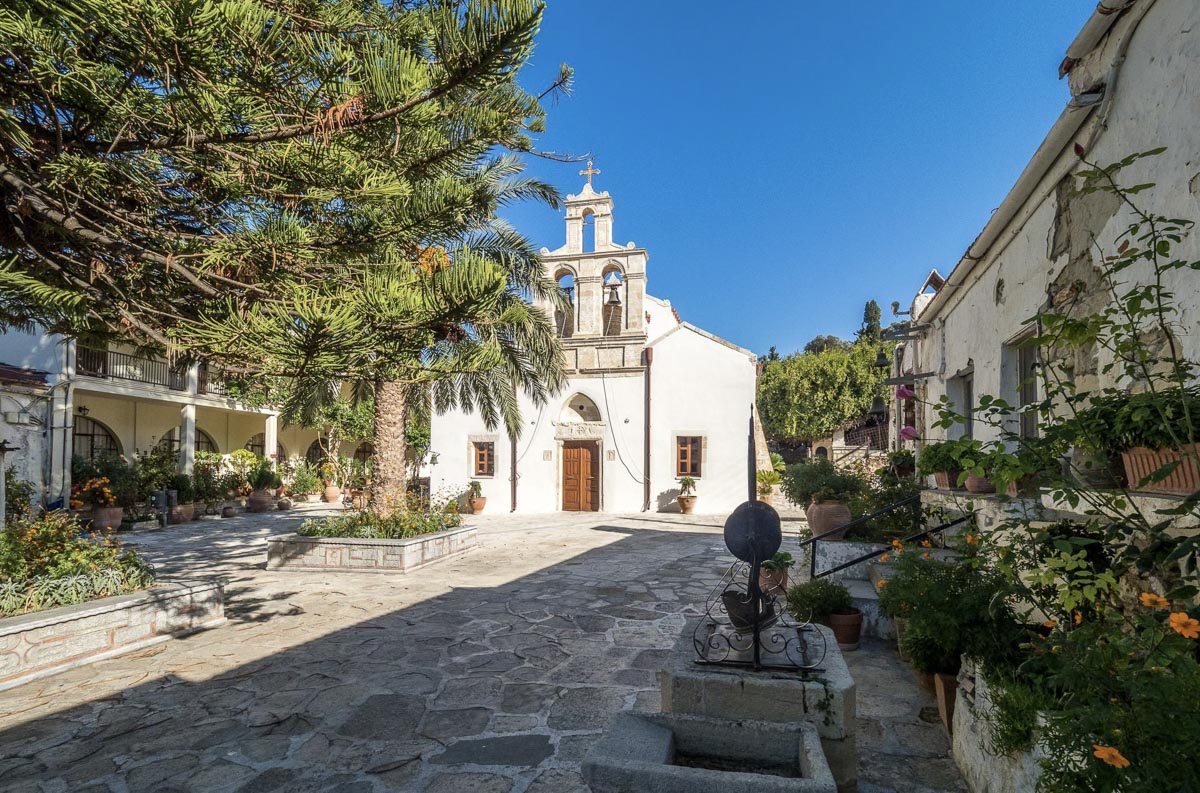
In the middle of an amphitheatrical slope, a beautiful monastery oversees the fertile valley. Paliani is considered as one of the oldest monasteries in Crete. There are few surviving written records about the area but, within the monastery, there are several stone remains which indicate that the monastery was built above or near an ancient settlement. The columns of green ophiolite breccia of Chasambali region, widely known as the Thessalian Green Stone, whose quarries near Larissa have been abandoned, stand out. This marble is the same as the one used to make the columns of Agia Sophia in Constantinople.
The surviving written sources are very few, but very helpful. On a Cretan-Mycenaean tablet (KN 819), found in Knossos, it is written: qa-ra (Palla), we-ke-i-ta, si-to etc., therefore wheat probably was cultivated in this valley during the Minoan period. Also, in a resolution of the city of Gortyna, which dates back to the 5th century B.C. the city grants public land to private individuals for cultivation “… tan em Palai (Pala) pytilian …” (Gratseas 2013, 17). Some researchers associate the word pytilian with the word pu-te-ri-ja, which appears on Linear B tablets from Knossos. The word pu-te-ri-ja may refer to plantations of vines or fruit trees (Mandalaki 2004, 178).




13. Kokkina Patitiria
Kokkina Patitiria
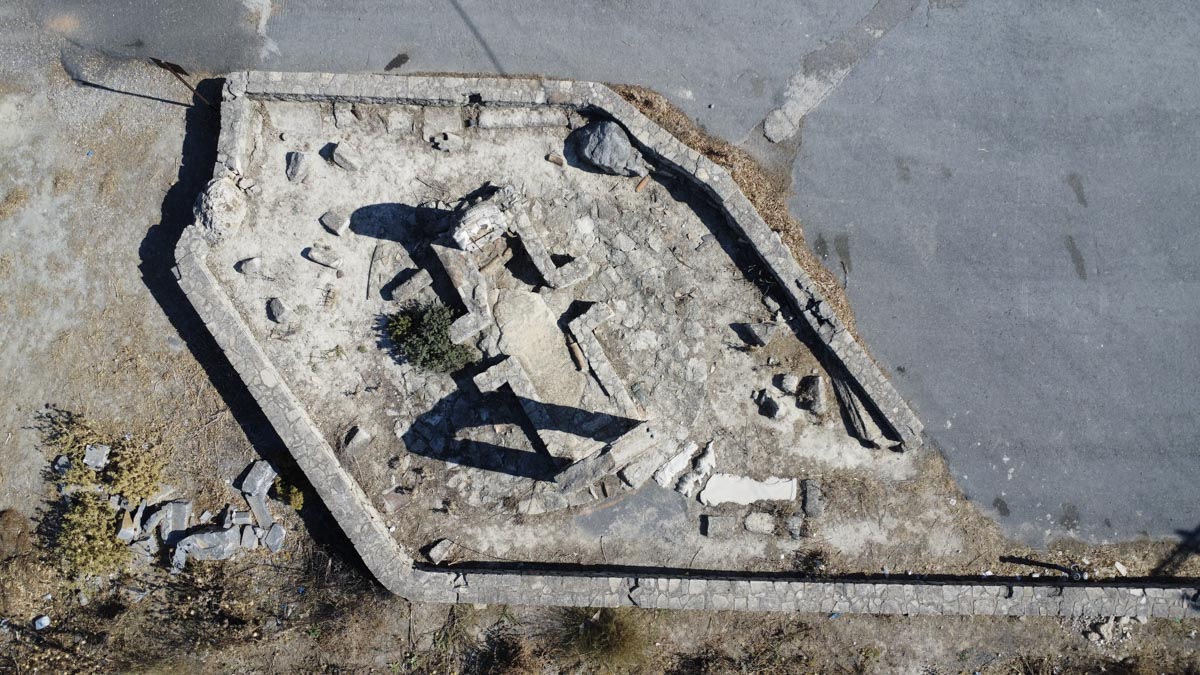
East of Paliani Monastery, a complex of wine presses, troughs (containers) and a grape press (galeagra, mangana), chiseled in the marly limestone, are preserved. More specifically, there are two carved wine presses with dimensions 4.10m x 3.60m. The carved base on the east is about 20 cm deep and, on the other sides, part of the built wall is preserved. Two chiseled troughs measure 1.30m x 1.10m x 0.90m and a third one measures 1.20m x 0.60m x 0.50m. The outflow hole which is 20 cm higher than the floor of the wine press is impressive. Also there is a grape press with an elliptical carved flat base 0.80m x 0.90m, and chiseled perforated bases where wood of 0.20m x 0.15m x 0.30m dimensions is fixed. The trough of the grape press is trapezoidal in shape with dimensions (0.64m+0.47m) x 0.40m and depth of 0.25m to 0.40m.


14. Apollo Winepress
Apollo winepress
East of Venerato, above the stream, a carved complex of a winepress and a trough is preserved, specifically a carved winepress with dimensions 2.30-2.10-1.40 x 2.10 x 0.40 m and a semicircular trough with dimensions 1.00-0.86 x 0.68 x 0.62 x 0.65 m. The winepress and the trough are connected by a closed faucet 0.20×0.12 m. The carved complex is surrounded by ivy and, next to it, grows a modern vineyard of Daskalaki Winery.
The region where the complex is located overlooks the valley of Palla and it stands directly opposite a carved facility, probably an acropolis of the Hellenistic period, where today stands the church of Agios Nikolaos.


